
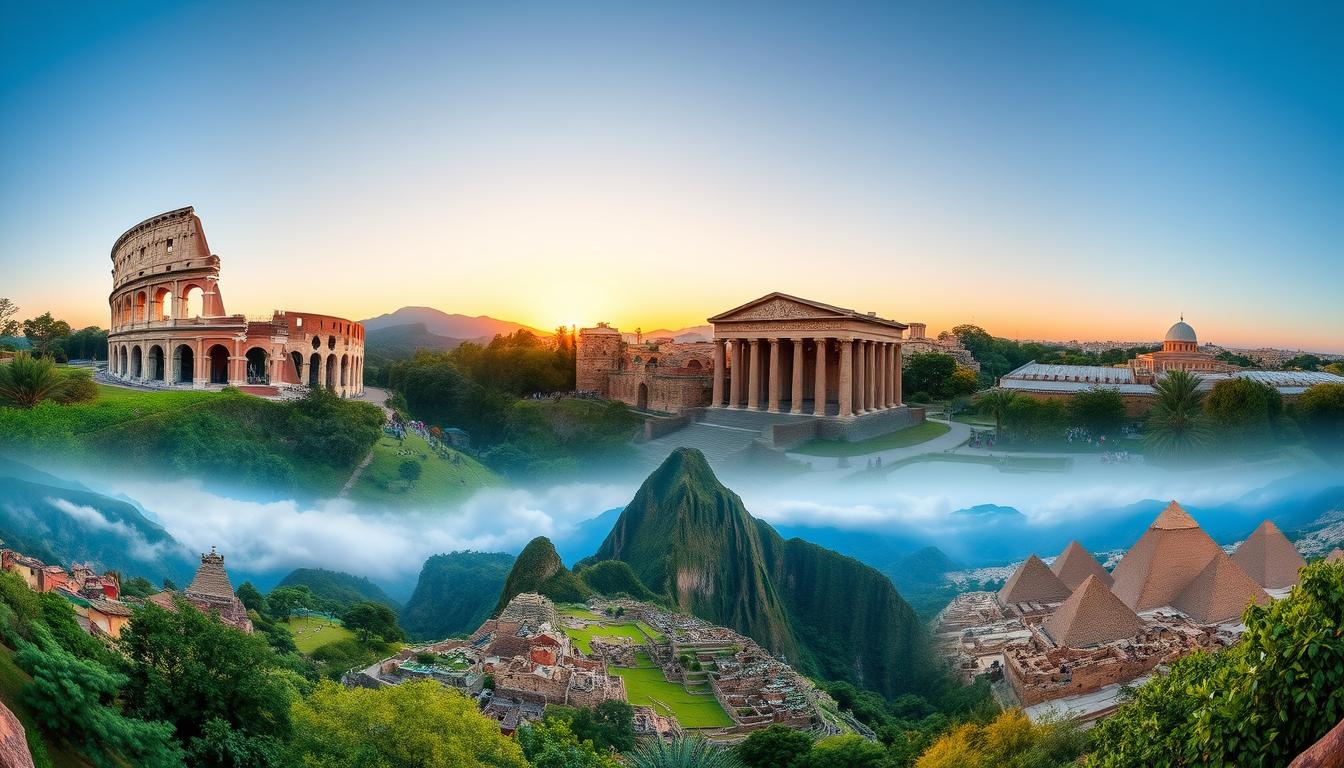
The world is full of amazing historic landmarks. These sites have shaped human history. They are perfect for history lovers or anyone wanting to learn about different cultures.
In this article, we’ll explore the most interesting historic sites globally. We’ll talk about their importance, unique features, and how to visit them. You’ll learn about the Seven Wonders of the Ancient World and World Heritage Sites.
We’ll also look at historic landmarks in America, castles worldwide, and ancient ruins. You’ll see the spiritual value of religious historical sites and the impact of colonial architecture.
If you’re planning a big trip or just want to learn more about history, this article is for you. It’s your guide to the most amazing historic sites around the world. Let’s start an incredible journey through time and discover the stories of our past.
Introduction to Historic Sites
Historic sites are places of deep cultural importance. They give us a glimpse into the past and keep our heritage alive. These sites, from ancient digs to grand monuments, capture our imagination and teach us about history.
At the core of historic sites is the goal of preservation. They protect our ancestors’ stories for future generations. By exploring archaeological sites, we learn about the lives and achievements of old civilizations.
“Historic sites are not just relics of the past; they are living, breathing testaments to the enduring resilience of the human spirit.”
Historic sites also boost tourism, attracting visitors worldwide. They offer educational experiences and help local economies thrive.
Exploring historic sites teaches us about the past’s importance. It helps us understand our world and our shared identity. It inspires us to build a better future, learning from the past.
The Seven Wonders of the Ancient World
The Great Pyramid of Giza in Egypt and the Hanging Gardens of Babylon in Iraq are famous. They show the skill of ancient people. These wonders were built a long time ago.
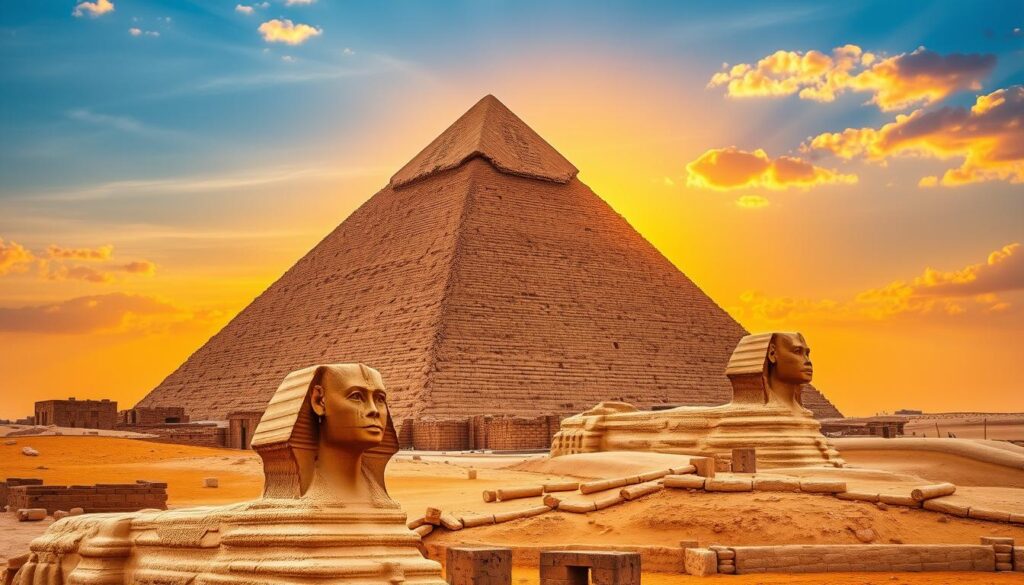
The Great Pyramid of Giza is the oldest and biggest pyramid in Giza. It was built around 2560 BC. It’s the only Wonder left and shows ancient Egyptian skill.
The Hanging Gardens of Babylon were made by King Nebuchadnezzar II around 600 BC. People still talk about its beauty. Its exact look is still a mystery.
The Colossus of Rhodes was a huge bronze statue of Helios. It stood on Rhodes for 50 years before an earthquake destroyed it in 226 BC. It’s still remembered for its beauty and skill.
“The Seven Wonders of the Ancient World stand as a testament to the ingenuity and ambition of our ancestors, inspiring awe and wonder in those who seek to understand the greatness of the past.”
UNESCO World Heritage Sites
Our world’s cultural and natural treasures are precious. UNESCO works hard to protect them for future generations. UNESCO World Heritage Sites are special places with great cultural, historical, or natural value.
These sites are chosen carefully. They must be authentic, intact, and well-protected. Places like Machu Picchu in Peru and Yellowstone National Park in the United States are examples. They show the amazing variety of our planet.
“UNESCO World Heritage sites are the crown jewels of the planet, places of such extraordinary importance that we as a global community have a duty to protect them.”
Keeping these sites safe is key. They face threats like urban growth, tourism, and pollution. UNESCO’s work helps keep these places for everyone to enjoy for years to come.
If you love history, nature, or just the beauty of our world, UNESCO sites are for you. By visiting and supporting these places, we help preserve our shared heritage.
Iconic Historical Sites in America
From the Statue of Liberty to Mount Rushmore, America has incredible historical sites. These landmarks are not just beautiful but also symbolize the nation’s history and values.
The Statue of Liberty welcomes immigrants with its grand design. It stands for freedom and democracy. Mount Rushmore shows the faces of four U.S. presidents, highlighting the country’s founding and leaders.
“Philadelphia’s Independence Hall is where the Declaration of Independence and the U.S. Constitution were signed, making it a hallowed ground for American history.”
There are many historical sites in the U.S., each with its own story. Independence Hall is where key documents were signed. These sites educate and inspire visitors from all over.

Visiting these sites helps us understand America’s history. It makes us think about the values that have shaped the country. We learn to appreciate the sacrifices and achievements of those who came before us.
Magnificent Castles Worldwide
Castles have always fascinated history lovers. They show us the grandeur of the past. Let’s look at some of the most amazing castles around the world.
In Germany, Neuschwanstein Castle is a fairytale come true. It was built in the 19th century by King Ludwig II. It mixes Romanesque and Gothic styles, standing out against the Bavarian Alps.
“Neuschwanstein Castle is a true masterpiece, combining the elegance of the past with the whimsical dreams of a visionary monarch.”
Edinburgh Castle in Scotland is another historic gem. It sits on a volcanic rock and has seen many dynasties rise and fall. It’s a symbol of Scotland’s strength for over a thousand years.
In Japan, Himeji Castle is a marvel of Asian architecture. It’s a UNESCO World Heritage Site. Its towers and walls show the ancient military strategies of Japan.
Castles like Neuschwanstein, Edinburgh, and Himeji tell unique stories. They show off their architectural wonders. Visiting these castles lets us dive into history and discover its secrets.
Ancient Civilizations and Their Ruins
Across the globe, ancient civilizations’ ruins show our ancestors’ ingenuity and resilience. Places like Machu Picchu in Peru, Angkor Wat in Cambodia, and Pompeii in Italy give us a peek into the past. They are a testament to the lives and legacies of those who came before us.
The city of Machu Picchu in the Andes Mountains is a marvel. Built in the 15th century for the Inca emperor, it’s a UNESCO World Heritage Site. Its stone architecture, terraced gardens, and mysteries draw visitors from around the world.
“Machu Picchu is so steeped in mystery. It’s like a wonderful fossil that has been preserved to this day.” – Hiram Bingham, the American explorer who rediscovered the site in 1911.
Angkor Wat in Cambodia is a symbol of the Khmer Empire’s grandeur. This massive temple complex, with its towers and carvings, was once the heart of a thriving civilization. Today, it’s a UNESCO World Heritage Site, attracting millions each year.
The Roman city of Pompeii was frozen in time by Mount Vesuvius’s eruption in 79 AD. Its ruins, from the Forum to the amphitheater, offer a rare look into Roman life. They fascinate archaeologists and visitors, showing the customs, architecture, and society of the time.
Religious Historical Sites
Travelers around the world can find a wealth of religious historical sites. These places, from grand cathedrals to peaceful temples, show us the beliefs and traditions of the past. They offer a glimpse into the cultures that have shaped our world.
The Vatican City is a famous religious site, being the heart of the Catholic Church. The St. Peter’s Basilica and the Sistine Chapel, with its stunning Michelangelo frescoes, attract many. The Western Wall in Jerusalem is also iconic, being a piece of the ancient Jewish Temple wall.
“The very stones of religious sites seem to whisper the stories of centuries past, inviting us to pause, reflect, and connect with the timeless truths that have inspired generations of believers.”
The Taj Mahal in India is a symbol of love and devotion. This white marble monument was built by Shah Jahan for his wife. It’s a stunning place that moves both the heart and the mind.
From mosques with tall minarets to Buddhist temples, these sites offer a deep experience. They help us understand the many faiths and cultures that make up our world.
Colonial Influences in Architecture
Across the globe, European colonialism’s legacy is clear in many historic cities’ architecture. From South America’s colorful towns to Southeast Asia’s charming villages, local and European styles blend. This mix shows the complex history of these areas.
Cartagena, Colombia, is a great example. Here, Spanish colonial and Afro-Caribbean styles meet. The city’s colonial towns boast colorful buildings with ornate balconies and clay-tiled roofs. These features show the European influence on architectural styles back then.
“Cartagena’s colonial architecture is a breathtaking fusion of Spanish and Caribbean styles, creating a visual delight that captivates visitors from around the world.”
Hoi An in Vietnam also shows a beautiful mix of Vietnamese and European influence in its architectural styles. The town’s colonial towns have traditional wooden houses, ornate temples, and French colonial villas. This mix has made it a UNESCO World Heritage Site.
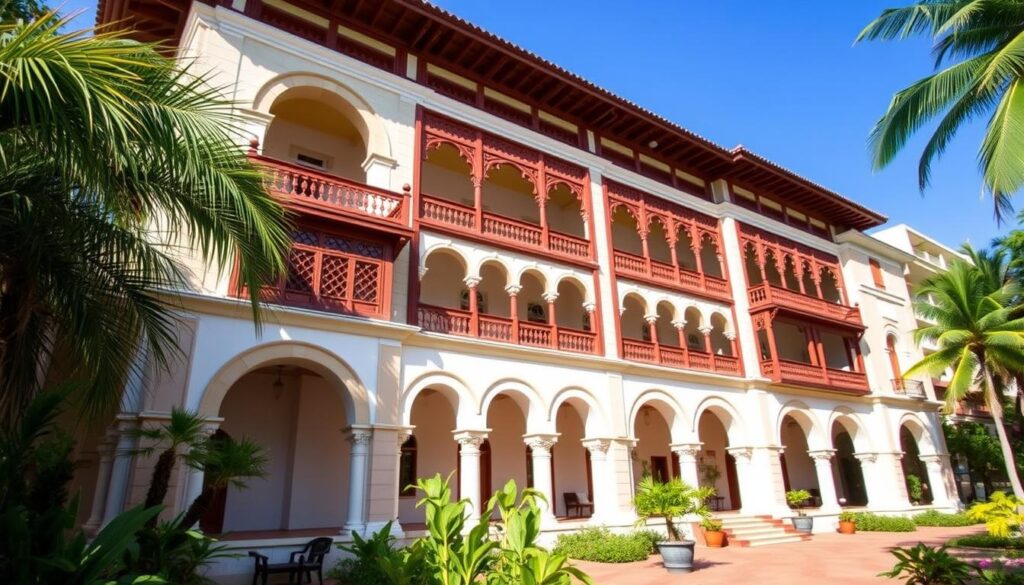
In Zanzibar, you’ll find stone fortresses, while Havana’s buildings are pastel-hued. These show the lasting impact of European colonialism on architectural styles. These colonial towns remind us of the world’s complex history. They invite us to explore and value the cultural richness from these interactions.
Museums as Historical Sites
Museums are more than just places to see art and history. They are historical sites that tell us about the past. The Louvre in Paris and the Smithsonian in Washington, D.C., are examples. They show how artifact preservation, cultural exhibitions, and educational institutions have evolved.
The Louvre was once a royal palace. Now, it’s the world’s largest art museum. The British Museum in London holds treasures from ancient times. It helps us understand our history.
“Museums are not just places to visit; they are gateways to the past, where the stories of our shared humanity are preserved and shared.”
The Smithsonian is a collection of 19 museums in the U.S. It’s a great example of how educational institutions can be historical sites. The Smithsonian’s exhibits and displays teach and inspire people. They help us appreciate our global heritage.
Museums are key to keeping our history alive. By visiting these sites, we learn about our shared human experiences. We also gain respect for art, culture, and knowledge.
Nature and History Combined
Exploring the world’s most captivating historical sites often means discovering a harmonious blend of natural beauty and human history. These sites showcase the intricate dance between nature and civilization. From stunning geological formations in national parks to ancient rock art, they are truly remarkable.
One such remarkable destination is Petra, the ancient rose-red city carved into the sandstone cliffs of Jordan. Visitors can marvel at the iconic Treasury building, a testament to the architectural prowess of the Nabataean people. The surrounding desert canyons add to the natural splendor.
Similarly, Göreme National Park in Turkey offers a mesmerizing combination of dramatic geological formations and the remnants of historical cave dwellings. It provides a glimpse into the interplay between the natural world and human habitation.
“Wherever you go, the past seems to permeate the present, and the present, in turn, recedes into the past.” – Pico Iyer
In the United States, Mesa Verde National Park in Colorado preserves the remarkable cliff dwellings and ancient rock art of the Ancestral Puebloan people. Their lives were shaped by the dramatic geological formations of the region. These sites not only captivate visitors with their historical significance but also immerse them in breathtaking natural landscapes.

The fusion of nature and history at these sites invites us to ponder the enduring relationship between humankind and the natural world. It shows how our civilizations have been shaped by the landscapes we inhabit. By exploring these remarkable destinations, we gain a deeper understanding of our world’s interconnected tapestry.
Tips for Visiting Historic Sites
Exploring the world’s most fascinating historical sites is a rewarding journey. Travel planning, guided tours, and respectful tourism are essential for a great visit. By following a few simple tips, you can dive deep into the past and gain a profound appreciation for these iconic destinations.
Guided tours are a great way to explore historic sites. These tours offer valuable insights and context. They also make sure you see all the important landmarks and details. Choose tour operators that focus on responsible tourism for a thoughtful and educational experience.
Timing is everything when visiting historic sites. Plan your trip during off-peak seasons or weekdays to avoid crowds. This way, you can fully enjoy the history and atmosphere of the location.
“Respect the local customs and preservation efforts at historic sites. Remember, you are a guest in these sacred spaces.”
It’s important to approach historic sites with reverence and respect. Learn about the local customs and preservation efforts. By being a responsible and considerate traveler, you help protect these cultural treasures for future generations.
Conclusion: The Importance of Exploring History
Exploring historic sites around the world is key to understanding our cultures. It helps us preserve our heritage and promotes global citizenship. By diving into the past, we learn to appreciate the many cultures and traditions that have shaped our world.
Keeping these historical sites alive is important. It honors our past and ensures future generations learn from it. Through preservation, we protect our shared identity and connect with our roots.
Exploring history helps us see beyond our own communities. It teaches us to respect and understand the diversity of human experiences. By doing so, we work towards a more just and connected world.