
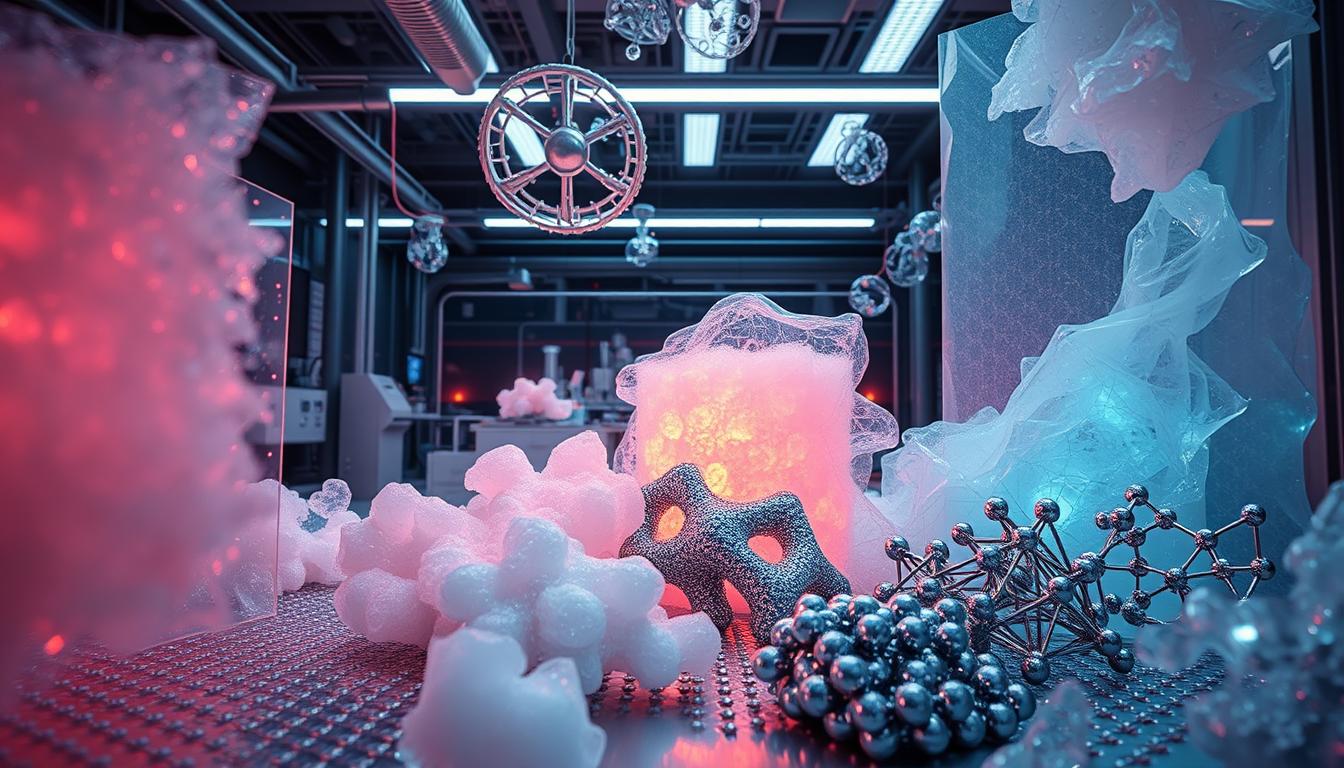
A revolution is happening in material science. Researchers and engineers are creating new materials that change our world. Graphene and aerogel are just a few examples, making new technologies possible.
In this article, we explore the amazing properties and uses of these materials. We’ll look at how they’re shaping our future. Get ready to learn about the coolest materials on Earth.
Introduction to Materials Science
Materials science is a field that combines physics, chemistry, engineering, and biology. It studies the properties and performance of different materials. This field drives innovation in many industries.
At its core, materials science looks at how materials work. It examines their atomic and molecular structure. This helps researchers understand how materials behave and perform.
By studying these properties, scientists and engineers can create new materials. These materials are designed for specific uses. They range from strong, lightweight materials for aerospace to biocompatible polymers for healthcare.
Understanding material properties and material engineering principles is key. It allows for the creation of innovative solutions. These solutions expand what’s possible in interdisciplinary science.
“Materials science is the foundation upon which all modern technology is built. It’s the key to unlocking the next generation of scientific breakthroughs.”
Graphene: The Wonder Material
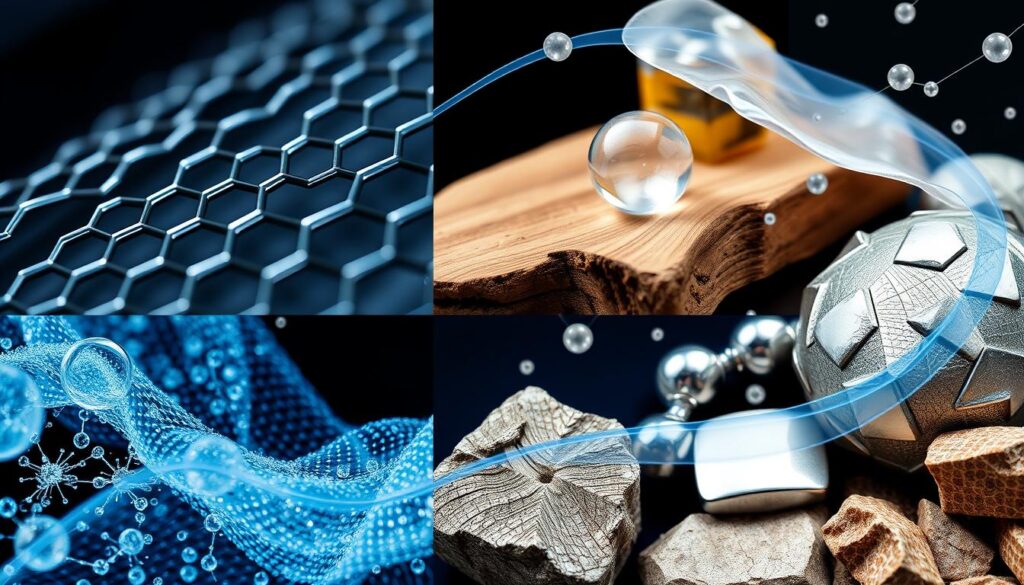
Graphene is a carbon allotrope that has amazed scientists. It’s a two-dimensional material made of a single layer of carbon atoms. This arrangement gives it amazing electrical conductivity and mechanical strength.
In 2004, Andre Geim and Konstantin Novoselov found graphene. They won the Nobel Prize in Physics for this discovery. Since then, graphene has changed many fields, like electronics and energy storage.
Its electrical conductivity helps make electronics faster and more efficient. Its mechanical strength is great for making composite materials stronger.
“Graphene is a material with almost limitless potential. Its unique properties open up a wealth of possibilities for new applications and technologies.”
Graphene is also key in energy storage. Graphene-based supercapacitors and batteries can store more energy and charge faster. This could lead to more efficient and long-lasting devices.
As graphene research grows, it’s set to be crucial in future tech and materials science. Its electrical conductivity and mechanical strength make it a true wonder material with endless possibilities.
Aerogel: The Lightest Solid
Aerogel is a true marvel in the world of materials. It’s called “frozen smoke” because it’s the lightest solid known. Made mostly of silica aerogel, it has a unique structure that helps it keep heat in or out.
What makes aerogel so light is its makeup. It’s made by removing liquid from a gel, leaving behind a network of tiny structures. This structure is not only light but also great at keeping heat from passing through.

Aerogel is not just good at keeping heat in or out. It’s also used in space to keep spacecraft and equipment cool. In buildings, it’s changing how we insulate, offering better performance without the weight of old materials.
Also, aerogel can soak up oil spills, thanks to its structure. As scientists keep working on materials, aerogel’s uses will only grow. It’s a true wonder of today’s world.
Shape Memory Alloys: Metals with a Twist
Shape memory alloys (SMAs) are a blend of science and engineering. They can “remember” their original shape, even after being bent a lot. This is because they can change their atomic structure with temperature or stress.
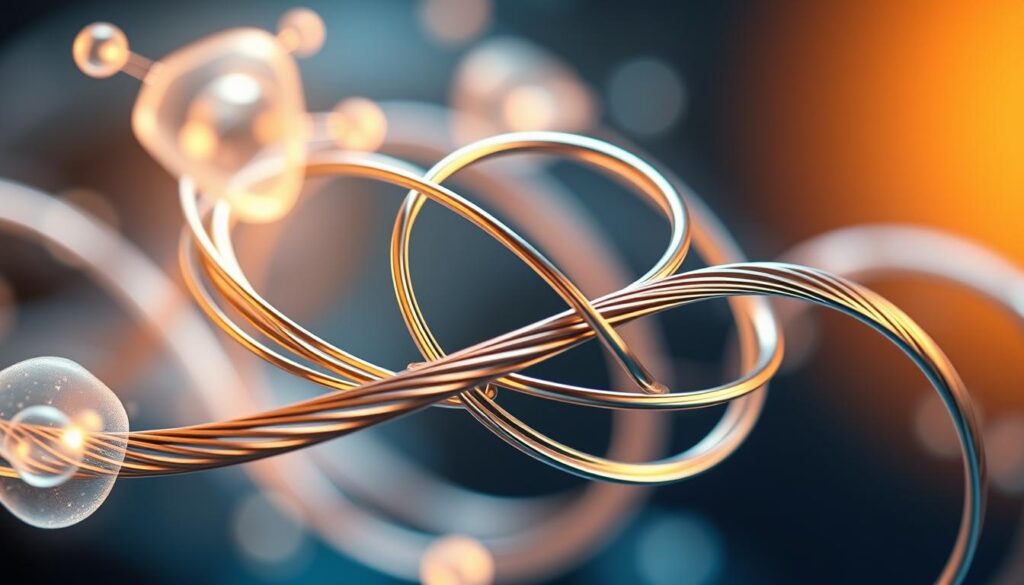
Nitinol, a mix of nickel and titanium, is a famous SMA. It goes back to its original shape when heated after being bent. This property is used in many fields, from aerospace to medicine.
“Nitinol’s ability to remember its shape and return to its original form makes it an ideal material for a wide range of applications, from orthodontic wires to stents used in minimally invasive surgeries.”
In medicine, shape memory alloys have changed procedures. For example, nitinol stents can be small and then expand inside the body. This helps in better cardiovascular treatments. Nitinol is also used in orthopedic implants and dental braces, making them more comfortable and effective.
The study of smart materials is growing. This means more uses for nitinol and other biomedical applications. It’s opening new doors in medicine and other areas.
Biodegradable Plastics: A Sustainable Alternative
As people become more aware of the environment, biodegradable plastics are seen as a key solution. These plastics, called bioplastics, come from plants and are better for the planet than regular plastics. They are made from renewable sources, not oil.
Scientists have made big progress in creating biodegradable plastics. They can be used for everything from food packaging to everyday items. This could change how we deal with waste and protect the environment.
“Bioplastics have the potential to dramatically reduce the environmental impact of plastic waste, while maintaining the versatility and performance we’ve come to expect from conventional plastics.”
Bioplastics are made to break down easily, either by microbes or chemical reactions. This means they leave little to no harm on the environment. Companies are choosing bioplastics to reduce their carbon footprint and help the planet.

The need for green solutions is growing, and so is the use of biodegradable plastics. This could lead to a future where we take care of the environment and use new materials wisely.
Smart Materials: Responding to the Environment
In the world of materials science, a new class of materials has appeared. These smart materials can change their properties based on their surroundings. This opens up new possibilities in many industries.
Piezoelectric materials are a great example. They can create an electric charge when pressed or stretched. This lets them be used in sensors, energy devices, and adaptive structures that adjust to their environment.
Photochromic materials are another interesting group. They can change color or become more transparent when light hits them. This makes them perfect for smart windows, self-tinting glasses, and wearable tech.
“Smart materials are the building blocks of a future where our surroundings can dynamically adapt to our needs and the environment.”
Self-healing materials are a big step forward. They can fix damage like cracks or scratches on their own. This can make products last longer, saving money and the environment.
As the world keeps changing, smart materials will become more important. They will help us make products and structures that can adapt. This will lead to a more sustainable and dynamic world, fitting our changing needs.
Carbon Nanotubes: Strength and Versatility
In the world of nanomaterials, carbon nanotubes are true marvels. They have amazing electrical properties and are incredibly strong. This has made them a focus for many researchers and engineers.
Carbon nanotubes are made of a single layer of carbon atoms rolled into a tube. Their unique shape gives them incredible strength, even better than steel. This makes them perfect for making stronger materials, useful in many fields like aerospace and construction.
“Carbon nanotubes possess a combination of properties that are unmatched by any other known material. Their strength, flexibility, and electrical conductivity make them a true game-changer in the world of advanced materials.”
But carbon nanotubes are not just strong. They also have amazing electrical properties. They can move electrons fast and can be conductors or semiconductors. This opens up many possibilities in electronics, like making faster transistors and flexible displays.
As scientists learn more about these incredible structures, the future looks bright. They could make our daily devices better and change whole industries. Carbon nanotubes are set to shape the future in ways we can’t even imagine yet.
Ceramics: More Than Just Pottery
When you think of ceramics, traditional pottery might be the first thing that comes to mind. But modern advanced ceramics have evolved far beyond their humble beginnings. These innovative materials are revolutionizing industries, from cutting tools to biomedical implants.
One of the remarkable properties of advanced ceramics is their exceptional hardness and wear resistance. This makes them ideal for use in cutting tools and engine components. These ceramic matrix composites can withstand extreme temperatures and harsh environments. They are crucial for high-temperature applications such as jet engines and industrial furnaces.
But the applications of ceramics don’t stop there. Bioceramics, a specialized branch of ceramics, are finding their way into the medical field. They provide effective and durable solutions for bone and joint replacements. These materials are not only biocompatible but also promote the growth of new bone tissue. This helps patients recover and regain their mobility.
“Ceramics have become an integral part of our modern world, revolutionizing industries and improving lives in ways we never could have imagined.”
As materials science continues to evolve, the future of ceramics is full of exciting possibilities. From cutting-edge technologies to life-saving medical advancements, these remarkable materials are proving that they are much more than just pottery.
Future Directions in Materials Science
Materials science is growing fast, opening up new possibilities. Metamaterials, made with special properties, are leading to big advances in optics and acoustics. Quantum materials are also changing the game, bringing new ways to process and store information.
Biomimetic materials, inspired by nature, are becoming more popular. They help solve many problems, from self-healing to saving energy. As we focus more on the environment, we’re working harder to make sustainable materials.
These new directions in materials science are exciting. They promise a future where our materials are not just useful but also good for the planet. With ongoing scientific progress, the future of materials science looks incredibly bright.