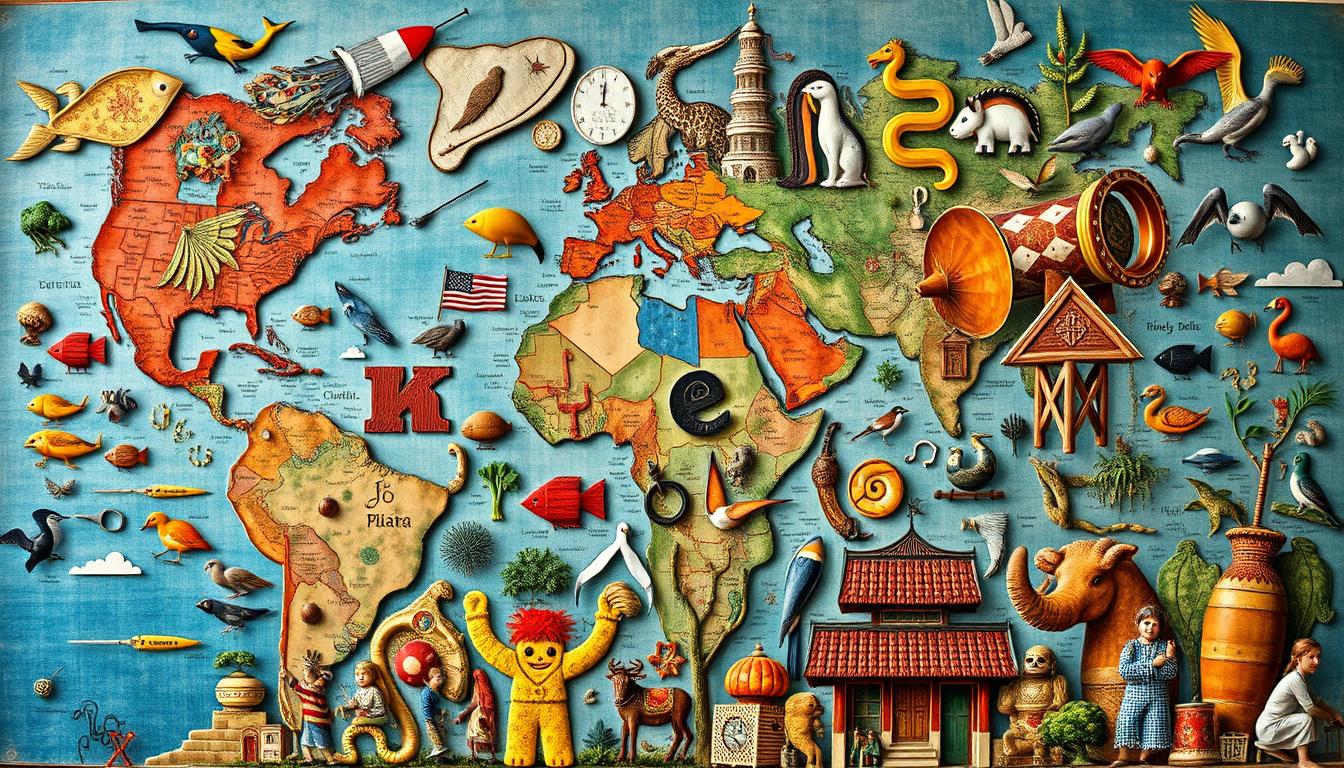
Welcome to the world of language trivia, where human communication is incredibly diverse. We find languages that are whistled, mimicking nature’s sounds, and pictographic scripts that use intricate symbols. This section will dive into uncommon languages, showing how people connect and express their culture in unique ways.
Language is more than just a tool for sharing information. It opens a window into our rich cultural heritage and shows our cognitive abilities. By exploring rare and obscure languages, we appreciate the diversity of human experience and our creative ways of communicating. Let’s uncover the secrets of the world’s most unusual languages and see how they enrich our global linguistic diversity.
What is Language Trivia?
Language trivia explores the facts, curiosities, and knowledge of human communication. It looks into the etymology of words and the complex grammar of rare languages. This sheds light on the complexity and diversity of how we express ourselves.
Did you know the longest word in English is “pneumonoultramicroscopicsilicovolcanoconiosis”? It’s a 45-letter term for a lung disease. Or that the shortest complete sentence is “I am”? These examples show how language trivia is both engaging and enlightening.
“Language is the road map of a culture. It tells you where its people come from and where they are going.” – Rita Mae Brown
Exploring the language knowledge of our world reveals interesting insights. We learn about the evolution of human communication. From writing systems to unique dialects and endangered languages, language trivia offers a peek into human expression.
If you love languages, are into etymology, or just curious about human communication, language trivia is for you. It opens the door to the world of linguistic facts and language curiosities. Discover the wonder of language and explore the fascinating world of language trivia.
Rare Languages You Might Not Have Heard Of
In our world, there’s a treasure trove of rare and obscure dialects. These endangered languages and obscure dialects are fascinating and crucial for our global culture. Let’s explore some of these linguistic gems.
Silbo Gomero is a unique whistled language from La Gomera, Spain. It’s used to communicate over steep ravines. This endangered language is being preserved through education.
Pirahã is spoken by a small tribe in Brazil’s Amazon. It’s known for its unique features, like no numbers or color terms. Saving Pirahã is a big challenge due to modern civilization’s impact.

Archi is spoken by less than 1,000 people in Russia’s North Caucasus. It has complex grammar and a detailed case system. Efforts to save Archi show the value of protecting our linguistic heritage.
These languages are just a few examples of the many rare and fascinating ones out there. By learning about and appreciating them, we celebrate the linguistic diversity that makes our world so rich.
Languages with the Most Speakers
The world has many languages, each with its own history and culture. Some languages stand out as the most spoken globally. Mandarin Chinese leads with over 1 billion native speakers, mainly in China and Taiwan. English is the most spoken language worldwide, with over 1.5 billion speakers, both native and non-native, everywhere.
Hindi is spoken by over 600 million people, mostly in India and Nepal. Spanish has over 480 million speakers, mainly in Spain and Latin America. These global languages are key for international communication, business, and cultural exchange. They show the linguistic demographics and language distribution around the world.
“Language is the road map of a culture. It tells you where its people come from and where they are going.” – Rita Mae Brown
The popularity of these most spoken languages comes from history, economy, and globalization. As the world gets more connected, these global languages will play an even bigger role. They will shape the linguistic demographics and language distribution of tomorrow.
Endangered Languages and Their Preservation
As the world gets more connected, many languages are at risk of disappearing. Losing these languages threatens our cultural heritage. Each language shows the creativity and expression of humanity. Saving these languages is crucial.
Language loss is caused by global languages, moving to cities, and ignoring indigenous groups. But losing a language means losing a special way of seeing and interacting with the world. That’s why bringing languages back is key for many groups and organizations.
Projects like reviving Hebrew and Hawaiian show the impact of community efforts. These efforts not only save languages but also boost cultural identity. They give marginalized communities a stronger voice in the world.
We must all help save languages and protect cultural heritage. This way, we can keep the variety of human expression alive. It makes our world richer with different views and experiences.
Unusual Grammar Structures in Languages
The world of linguistics is full of fascinating oddities. One interesting aspect is the unique grammatical features in various languages. For example, Hungarian has a complex case system, while Pirahã lacks color terms. These complexities show how differently humans see and describe the world.
The Hopi language, spoken in Arizona, is known for its detailed tense system. It has many past, present, and future tenses. This shows the Hopi people’s deep understanding of time and their cyclical view of life.
Pirahã, spoken in the Amazon, is another oddity. It doesn’t have basic color terms. This has sparked a lot of study, as it challenges the idea that all languages have basic color categories. The Pirahã people see the world in a more fluid and contextual way, without strict color distinctions.
“The diversity of grammatical structures found in the world’s languages is a testament to the incredible complexity and creativity of human language.”
These unique features not only interest linguists but also offer insights into language complexity. They show the diverse ways cultures perceive and experience the world. By exploring these oddities, we can appreciate the richness and diversity of human language more deeply.
Dialects That Are Often Confused
Language is always changing and growing into different regional variations. This diversity adds richness to our cultures but can also cause linguistic misunderstandings and language differences. We’ll look at some of the most mixed-up dialects and why they split apart.
The difference between American and British English is a big example. These two regional variations have their own sounds, grammar, and words. Colonization, immigration, and cultural changes have shaped these dialect studies.
“It’s not just a matter of accent or spelling; the way we construct sentences, the idioms we use, and even the meanings we ascribe to certain words can vary widely between the two varieties of English.”
Mandarin and Cantonese Chinese dialects also cause linguistic misunderstandings. They share a writing system but sound, tones, and words differ. This can make communication hard for those not used to the language differences.
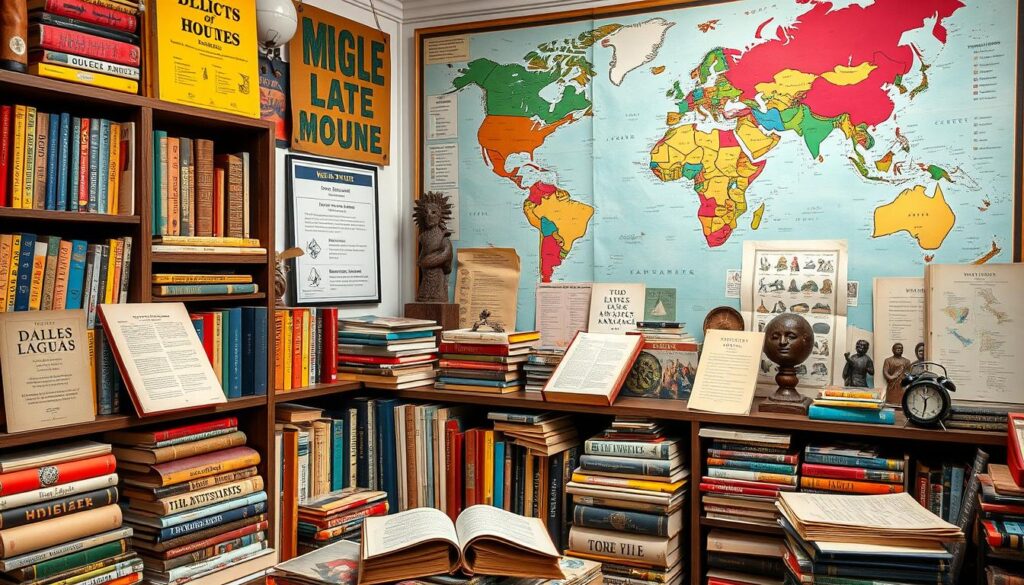
The Arabic-speaking world has a wide range of dialects. From Levantine Arabic in the Levant to Maghrebi Arabic in North Africa, they vary a lot. Knowing these dialect studies is key for clear communication and cultural exchange in the Arab world.
Whistled Languages: A Unique Communication Method
Whistled speech is a fascinating way people communicate around the world. It’s found in places like the Canary Islands and Kuşköy, Turkey. These languages use high-pitched whistles to send messages over long distances.
The Silbo Gomero is a whistled language from the Canary Islands. It’s been used for centuries to talk across the island’s tough terrain. Whistlers can share news, warnings, or even whole conversations over several kilometers.
In Turkey, the “bird language” of Kuşköy lets people talk while working in the fields. This tradition has been passed down for generations. It shows how language can change to fit the environment.
“Whistled languages are not just a curiosity, but a unique window into the human capacity for innovation and the diversity of our cultural expressions.”
These languages are more than just a way to talk. They help keep traditional ways of life alive. As the world changes, it’s crucial to keep these unique ways of speaking alive. This ensures our communication stays rich and varied.
The Role of Language in Cultural Identity
Language is key to our cultural identity. It shapes how we see the world and connect with others. Each language has its own special traits that show a group’s history, traditions, and values. This link between language and society is really interesting to study.
Keeping languages alive is vital for our cultural heritage. Losing a language means losing a community’s identity, traditions, and views. Linguistic identity and cultural preservation are closely linked. Language is how we pass on cultural knowledge to future generations.
Language also shapes social dynamics and power in society. The way we speak can affect our education, jobs, and access to resources. Studies show that different ways of speaking can show social class, ethnicity, and where you’re from.
“Language is not just a means of communication, but a reflection of our very humanity.” – renowned sociolinguist, Deborah Tannen
In today’s global world, protecting language diversity is more important than ever. By understanding how language, culture, and society interact, we can help keep human expression diverse. This way, every community’s unique way of speaking can continue to flourish.
Pictographic Languages: A Visual Way to Communicate
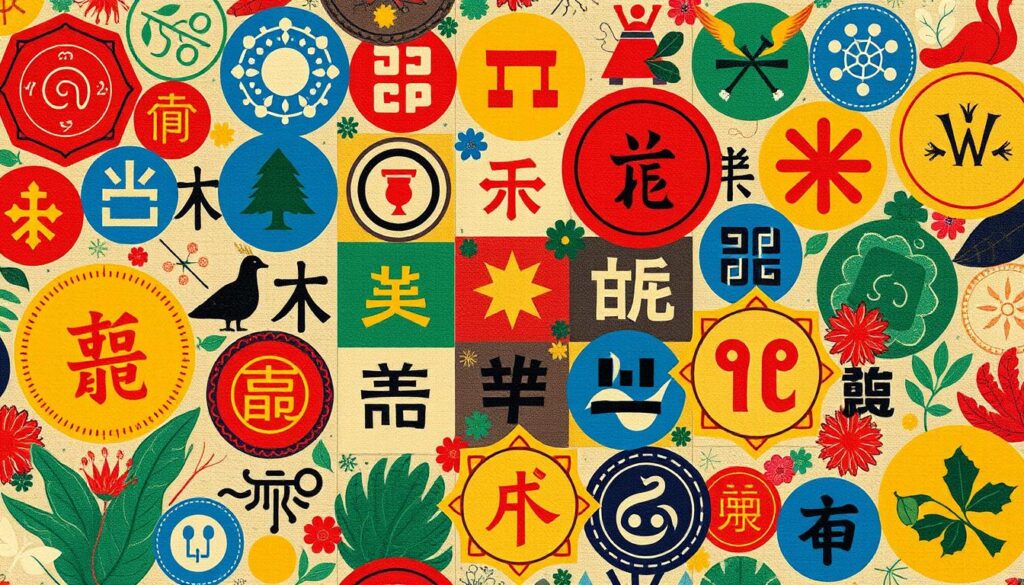
In today’s world, digital communication is everywhere. Yet, we often forget the history of visual languages. Pictographic writing systems, like Chinese characters and Egyptian hieroglyphics, have been key in human expression and culture. They show our ancestors’ creativity in visual communication.
These languages were created to share complex ideas and feelings through symbols. Chinese characters, for example, started as simple pictures and grew into a complex writing system. Ancient Egypt’s hieroglyphics were more than just decorations; they recorded history and culture.
Reading and writing pictographic languages is different from phonetic scripts. Ideograms and logograms need special visual recognition and mental connections. This way, users get meaning directly from the symbols, not just sounds.
“The beauty of pictographic languages lies in their ability to transcend linguistic barriers, allowing for a universal form of visual communication that bridges cultural divides.”
Looking into human languages, pictographic systems highlight our diversity and creativity. From ancient hieroglyphics to modern Chinese characters, these languages still inspire us. They show the power of human creativity and our need to communicate.
Language Influences on Pop Culture
The connection between language and popular culture is really interesting. It shows how fast language trends spread on social media. It also shows how unique languages in movies and TV shows impact us.
For example, slang and neologisms are big on social media. Sites like Twitter and TikTok are where new words and phrases start. These terms quickly become popular and are used by many.
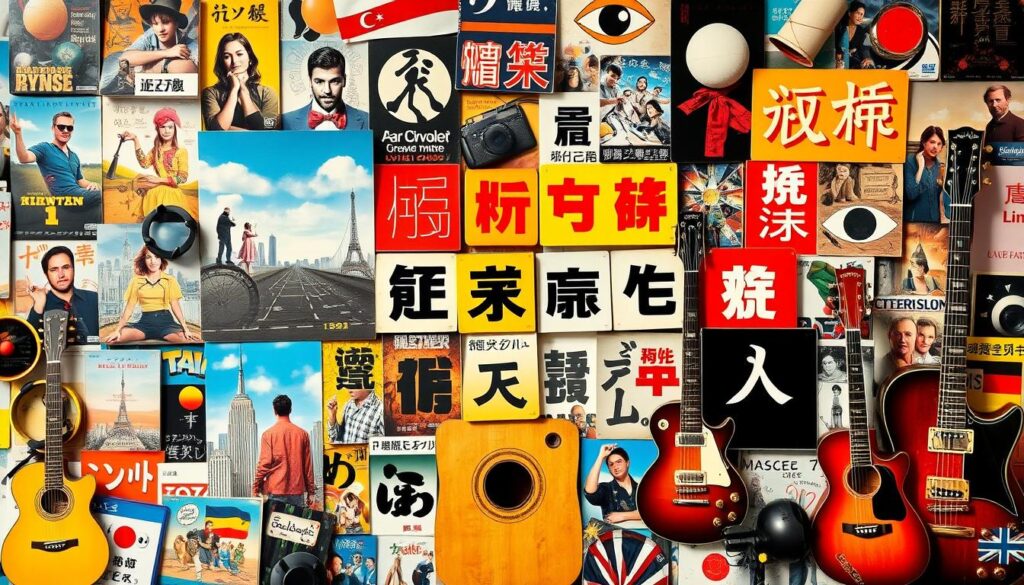
Also, movies and TV shows have introduced special languages. Think of Elvish from Lord of the Rings and Klingon from Star Trek. These languages not only entertain us but also make us think about language and culture.
Music and entertainment also spread language around the world. K-pop, for example, has made Korean slang popular worldwide. This shows how language can connect people across cultures.
The Science of Language Acquisition
Learning a language is a complex and fascinating process. It has caught the attention of many for decades. Language learning mixes innate abilities, environmental factors, and the brain’s flexibility.
Studies show that language processing mainly happens in the left brain. But, the brain can adapt and learn language even with injuries or disorders.
Being bilingual has many cognitive benefits. Bilingual people often have better executive function and problem-solving skills. This is because their brain gets stronger at switching between languages.
“The acquisition of language is one of the most remarkable achievements of the human mind.” – Steven Pinker, cognitive scientist and linguist
New research looks at how age, motivation, and exposure to language affect learning. This knowledge helps educators and policymakers create better language learning strategies for everyone.
The study of language acquisition keeps growing. It gives us insights into the human mind and its amazing language abilities. As we learn more about language learning, we see how complex and resilient our language skills are.
Fascinating Writing Systems Across Cultures
Explore the world’s diverse writing systems, each with its own history and features. Chinese characters are known for their elegance, while Korea’s Hangul script is efficient. Orthography reflects cultural identity and intellectual expression.
Learn about alphabets, syllabaries, and abjads. See how they evolved. The Ethiopian Ge’ez script is precise, and Indian Devanagari has intricate ligatures. These scripts have shaped our communication, preserving knowledge and traditions.
Step out of the Roman alphabet and dive into global writing systems. Discover the stories behind these scripts. They show how cultures adapt and thrive, offering a glimpse into their vibrant traditions.