

In today’s fast-changing world, knowing science well is key. Science literacy means understanding and using scientific ideas. It’s essential for making smart choices, creating new things, and moving our society forward. This guide will show how to make more people in the U.S. understand science.
To boost science literacy, we need to spark curiosity in everyone, from kids to adults. By encouraging curiosity, we help people think deeply, solve problems, and value science. This leads to a society that values STEM education and wants to learn about the world.
It’s also key to make science easy for everyone. We should turn hard ideas into simple, real-life examples. This helps people feel they can use science in their everyday lives. We can use tech like apps, games, and VR to make learning fun.
Improving science literacy means using many ways to learn, working with science experts, and bringing science into everyday culture. By making the STEM community diverse and welcoming, we can fight stereotypes and make science open to everyone.
As we look into science literacy more, we’ll find many ways and ideas to change how we see the world. These can help us make choices based on science, shaping our future.
Fostering a Curiosity-Driven Mindset
Starting with science literacy means growing a real curiosity and love for learning. By encouraging questions and critical thinking, we help people connect with science. This way, they find joy in scientific discovery. This method makes us understand the world better and keeps us excited about exploring.
Encouraging Questioning and Critical Thinking
Learning through curiosity drives scientific progress. We create a space where questions are welcome and critical thinking is supported. This lets people question assumptions, think differently, and explore the natural world deeply. Questioning and critical thinking are key to solving problems and valuing the scientific method.
Celebrating the Joy of Discovery
Science is all about discovery, and finding new insights or seeing experiments can be exciting. By celebrating scientific achievements, we spark wonder and make people enthusiastic about science. This excitement keeps curiosity alive, making people want to be part of science and technology.
Demystifying Science: Making it Accessible
One big challenge is making science easy for everyone to get. We need to share scientific ideas in a simple way. By using fun educational tools and breaking down big topics, we can make science less scary.
Accessible science is about more than just simple words. It’s about using stories and examples that grab people’s attention. This way, even tough science ideas can seem exciting and easy to grasp.
For STEM education, we need great resources that are easy to understand. We should offer many kinds of materials, like websites, games, experiments, and virtual reality. This variety helps students of all ages learn in ways that work best for them.
By making science easy to get, we help people explore scientific ideas and ask questions. This leads to a society that understands science better. It prepares us to face the challenges of today and tomorrow.
Leveraging Technology for Engaging Learning
Technology has become a key tool in science education. It helps capture students’ attention with interactive apps, educational games, and immersive experiences. These include virtual reality (VR) and augmented reality (AR).
Interactive Apps and Educational Games
Interactive apps and games make learning science fun and easy. They let students explore scientific concepts in a hands-on way. This approach helps them understand the subject better.
Students can simulate chemical reactions or examine virtual specimens. These tools make learning both enjoyable and informative.
Virtual Reality and Augmented Reality Experiences
Virtual reality (VR) and augmented reality (AR) take learning beyond the classroom. Students can enter a virtual lab or explore the ocean. These technologies offer a new way to learn that’s engaging and interactive.
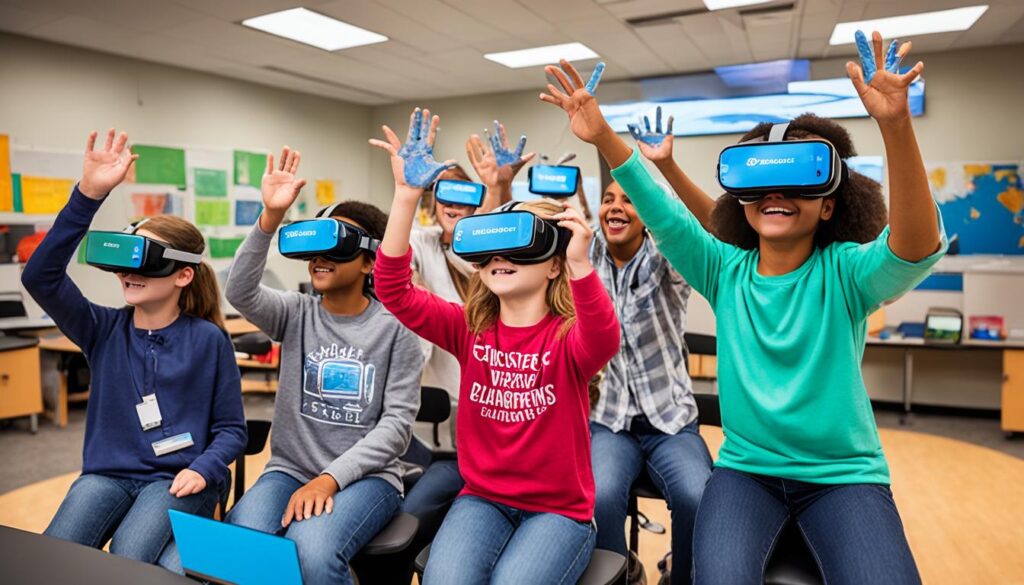
Technology makes learning interactive and immersive. It sparks students’ curiosity and deepens their understanding of science. From apps and games to VR and AR, technology is changing science education.
Promoting Hands-On Learning Opportunities
Hands-on learning is a great way to make science more interesting and meaningful. It lets students dive into experiments, projects, and activities. This approach helps them think critically, solve problems, and love science more.
Science Fairs and Competitions
Science fairs and STEM competitions are perfect for students to show off their skills. They offer hands-on learning and let students work on their own projects. These events boost their scientific knowledge and teach them important skills like speaking, working together, and presenting.
Science fairs and competitions let students explore what they love, use what they’ve learned, and get praised for their hard work. These experiences spark curiosity and a deep respect for science. They make students see how science affects our lives every day.
Building Partnerships with Scientific Institutions
Working with scientific places like museums, universities, and research centers can boost science learning. These partnerships give learners access to great resources and expert knowledge. They also offer chances to dive deep into the science world.
Schools and groups can use these partnerships to get into STEM resources. They can offer things like interactive exhibits, hands-on workshops, and virtual reality experiences. These make science exciting and easy to understand for everyone.
Scientific places also start outreach programs to spread science education. These programs might include science fairs, competitions, and events for the public. They make STEM subjects fun and motivate people to keep exploring.
By using what scientific places know and offer, teachers and leaders can make a strong science education system. This helps learners to explore, discover, and really appreciate the natural world.
Science in Pop Culture and Media
Science can grab our attention and inspire us through pop culture and media. By using storytelling, we can make science more interesting to the public. This helps share science with more people and connects science to our everyday lives.
Leveraging the Power of Storytelling
Storytelling makes complex science easy to understand for everyone. It turns science into something we can all relate to. Movies, TV shows, books, and social media use stories to make science exciting and unforgettable.
Working with creative people like writers and directors helps scientists share their work in new ways. This teamwork improves how the public sees science. It also makes people value the science in our lives more.
Social media has changed how we talk about science. Now, scientists and fans can share their love for science with more people. Sites like TikTok, Instagram, and YouTube let science be fun and easy to learn. They offer videos and challenges that get people talking and feeling part of a science community.
Cultivating a Diverse and Inclusive STEM Community
It’s key to make STEM fields more diverse and inclusive. We need to tackle the barriers and biases that stop underrepresented groups from joining and doing well in STEM. This section looks at ways to make the STEM community more welcoming for everyone.
Addressing Stereotypes and Biases
One big hurdle is fighting against stereotypes and biases in STEM. These ideas, like thinking STEM is only for white or Asian men, make some feel left out. This stops people from even trying to get into STEM careers. We must tackle these biases at both personal and group levels to welcome everyone into STEM.
Programs like mentorship, reaching out to underrepresented groups, and training on diversity can help. Creating a culture of respect and understanding lets people from all backgrounds succeed in STEM. It also brings in their fresh ideas and skills.
Science Literacy for Informed Decision-Making
Science literacy is more than just learning facts. It’s about helping people make smart choices with scientific evidence. In our world full of information, knowing how to look at and understand data is key. This skill lets citizens make choices based on facts, which shapes our society.
Science literacy gives people the tools to deal with tough issues. It helps them understand things like climate change, new medical treatments, and energy policies. This way, they can make choices that are well thought out.
Also, making decisions based on evidence is vital for solving big problems. Leaders and policymakers use science to make better choices. This means they can improve lives and make a positive change.
Science literacy is important for everyone. It makes our society more informed, active, and strong. With it, we can face the challenges of today and tomorrow together.
Integrating Science into Everyday Life
Science literacy is more than just learning in class. It’s about bringing science into our daily lives. By seeing science in our daily routines, we can live more thoughtfully and understand its big impact.

Science is everywhere, from our morning commute to cooking at home. By valuing these scientific ideas, we make better choices and solve problems. This mindset makes our lives more interesting and fulfilling.
Sharing science with others helps us all. When we talk about science and its uses, we encourage others to see its value. This leads to more people caring about science and tackling big challenges together.
When we bring science into our daily lives, we make choices based on science. This helps us understand the world better and move science forward. By doing this, science becomes a key part of our everyday.
Engaging Diverse Audiences
Teaching science to everyone means we must think carefully about what each group needs. We should make sure our science talks to people of all ages and backgrounds. This way, everyone can understand and enjoy science more.
Tailoring Approaches for Different Age Groups
We need to grab the attention of young minds with fun experiments and use the latest tech with older students. Making science fit the learning level and interests of each age group is crucial. This helps keep people curious and loving science for life.
Addressing Language and Cultural Barriers
Science talks should reach everyone, no matter their language or culture. Using many languages, adding cultural touches, and sharing stories of diverse scientists helps break down barriers. This makes sure everyone can get into science, no matter where they come from.
With these methods, we make science education welcoming for everyone. This approach boosts science knowledge and shows how science affects our daily lives. It’s all about making science a part of our shared human experience.
Measuring and Evaluating the Impact
It’s crucial to check how well science literacy programs work. By using strict checks, leaders can see how many people join, how much they learn, and how they change. This helps improve and make programs better over time. Important things to look at include how many people take part, what they learn, and how they make better choices.
Using different kinds of data helps get a full picture of how well programs work. This data includes tests before and after the program, what participants say, and how they do over time. Looking at this data shows if the program makes people curious, helps them think better, and gets them involved with science in their everyday life.
By always checking how science literacy programs do, leaders can find what needs work. They can fix problems and use data to make their efforts better. This way, programs keep up with what the community needs and keep making a big difference in getting people to understand and engage with science.