
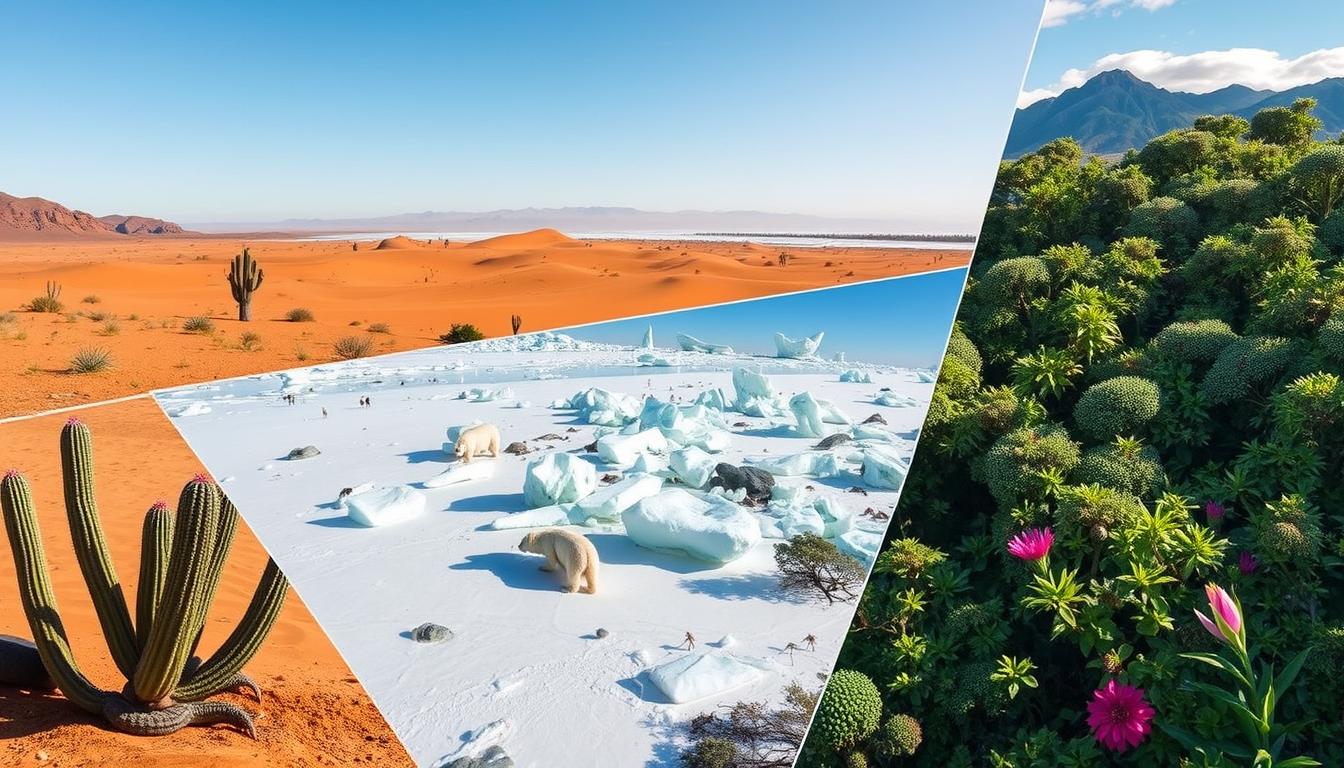
The natural world is full of amazing diversity. It tells the stories of creatures that live in the toughest places. From hot deserts to cold tundras, wildlife biology shows how animals adapt to survive.
Explore the world of animal adaptations. Here, animals change their bodies and behaviors to live in harsh conditions. See how desert animals save water, how polar animals stay warm, and how many creatures use evolution to beat challenges.
Learn how wildlife overcomes tough situations. Discover how animals control their body heat and how genetics help them adapt. Also, find out how climate change affects these ecosystems and why we must protect wildlife.
Join us on a journey through wildlife biology. You’ll be amazed by the wonders of adaptation. It will make you appreciate the incredible resilience of life on Earth.
Introduction to Wildlife Biology and Adaptation
In the world of evolutionary biology, we explore how species survival is linked to changing environmental pressures. We see how animals adapt to survive in extreme places through natural selection.
Life on Earth, from deserts to icy tundras, shows the strength of wildlife biology. Species face challenges and find ways to keep going. Their adaptations come from a long history of learning from their environment.
“Adaptation is the extraordinary general capacity to learn, to profit from the past, to face novelty with confidence.”
Learning about these adaptations helps us understand life’s complex web. By studying how organisms change in response to their environment, we see the natural world’s strength and flexibility.
Studying wildlife biology reveals how species not only survive but also flourish in tough times. This journey into the natural world’s strategies shows the lasting impact of evolutionary biology and life’s ability to adapt and succeed.
Types of Extreme Environments
Earth’s natural world is full of diverse ecosystems. Each one faces unique challenges and has special adaptations. Animals have found clever ways to survive in places like deserts, polar regions, deep oceans, and high altitudes.
In the hot desert ecosystems, animals like camels, lizards, and cacti save water and keep cool. In the cold polar regions, creatures such as polar bears, seals, and penguins stay warm with thick fur and blubber.
“The ability of organisms to adapt to their environment is one of the most fascinating aspects of the natural world.”
The deep sea is home to strange creatures like anglerfish and giant squid. They live in extreme pressure, little light, and scarce resources. At high altitude, animals like yaks, snow leopards, and Himalayan griffon vultures have special bodies to survive.
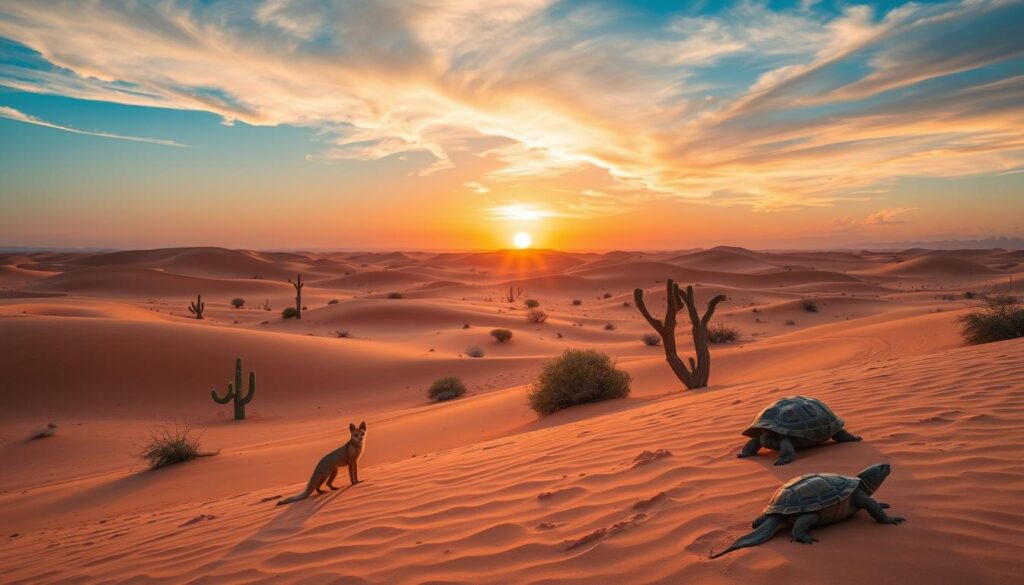
These extreme places are tough for wildlife. But the amazing ways animals adapt show how strong and varied life on Earth is.
Physiological Adaptations in Animals
Animals have developed amazing ways to live in extreme places. They change their bodies to handle hot deserts and cold polar regions. Let’s look at the cool world of metabolic adjustments, osmoregulation, thermoregulation, and respiratory adaptations.
In dry places, animals must save every drop of water. Osmoregulation helps them do this. Some desert animals can take water back from their urine, keeping their body fluids balanced.
Keeping the body temperature right is also key. Animals like camels store fat in their humps for heat. Polar bears have thick fur to stay warm in the cold.
Respiratory changes are vital too. Animals living high up, like the Tibetan antelope, have bigger lungs and better hemoglobin for more oxygen. Sea creatures have gills or special parts to get oxygen from water.
“Physiological adaptations are the key to unlocking the secrets of how animals thrive in the most challenging environments on Earth.”
By studying these metabolic adjustments, osmoregulation, thermoregulation, and respiratory adaptations, we learn about nature’s amazing strength.
Behavioral Adaptations
Animals have amazing ways to survive in tough environments. One way is through migration patterns. Animals travel long distances to find better places to live, especially when seasons change. For example, many birds fly to warmer places in winter to avoid cold weather.
Hibernation is another cool adaptation. Animals slow down their metabolism and get colder to save energy in winter. Bears, ground squirrels, and bats often hibernate. Estivation is like hibernation but for hot, dry weather. Animals sleep to save water and energy.
Social behaviors help animals deal with harsh environments too. Social behaviors like working together can help find food, spot dangers, and stay warm. Penguins huddle to stay warm, and lions hunt better in groups.
“Behavioral adaptations are the key to survival in extreme environments, allowing animals to optimize their chances of thriving in the face of adversity.”
Morphological Adaptations
In the world of wildlife biology, animals’ physical traits are key to their survival. They have developed camouflage, specialized limbs, and protective coverings. These traits show nature’s incredible creativity.
Camouflage is a striking example of adaptation. Animals like the Arctic hare and the chameleon can hide in plain sight. This helps them avoid predators and catch prey.
Specialized limbs are also impressive. The polar bear’s wide feet help it move on ice. The eagle’s sharp talons let it fly and catch food with ease.
Protective coverings, like the musk ox’s fur and the pangolin’s scales, keep animals safe. These adaptations shield them from harsh environments and are crucial for survival.
“Nature is full of wonders, and the morphological adaptations of animals are a testament to the ingenuity of life itself.”
Learning about animals’ physical traits helps us appreciate their amazing survival strategies. It shows how they’ve adapted to live in tough habitats.
Case Study: Desert Animals
The desert is a tough place, but its desert fauna have learned to survive. They use smart ways to save water and stay cool. These animals show us how clever nature can be.
Desert animals are experts at not losing water. For example, kangaroo rats don’t need to drink water for a long time. They get water from breaking down their food. Desert tortoises also save water by storing it in special parts of their bodies.
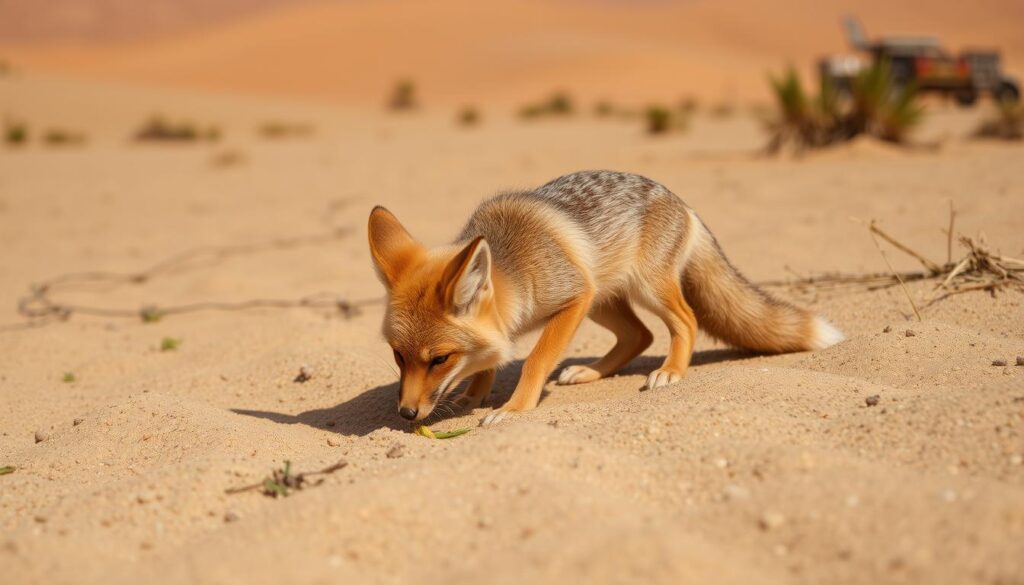
Many desert animals are active at night. This helps them avoid the hot sun. Creatures like the Gila monster and desert bighorn sheep save energy and water by staying up late.
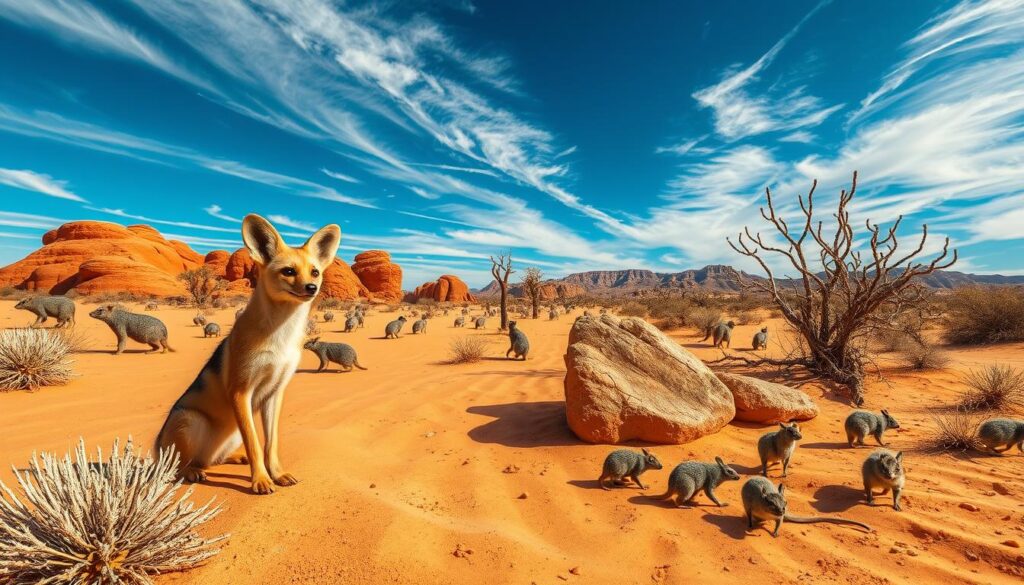
Desert animals also have special body features to help them survive. The desert tortoise can control its body temperature. Kangaroo rats have kidneys that work very well to save water.
“The desert is a crucible, forging the most resilient and adaptable creatures on Earth.”
As we face climate change, desert animals can teach us a lot. Their ways of saving water, staying cool, and being active at night could help us live better in tough conditions.
Case Study: Polar Adaptations
The Arctic and Antarctic are home to amazing wildlife. Animals like the polar bear and penguin have special ways to survive the cold. They have developed clever strategies to live in the icy environments.
One key adaptation is blubber, a thick layer of fat. It keeps them warm and acts as an energy reserve. They also have dense fur or feathers to trap air, protecting them from the wind.
Polar animals also have antifreeze proteins. These proteins stop ice from forming inside their bodies. This is crucial for marine life, like Antarctic fish, to survive in icy waters.
The ability of polar wildlife to adapt is truly impressive. It shows the incredible diversity of life on Earth. As we deal with climate change, learning about these adaptations helps us appreciate and protect these unique ecosystems.
Thermal Regulation in Extreme Conditions
Animals have amazing ways to keep their body temperature right, even in extreme weather. They are either endothermic or ectothermic. Endothermic animals, like mammals and birds, make their own heat. Ectothermic animals, like reptiles and amphibians, get their heat from outside.
Endothermic animals use insulation, vasodilation, and evaporative cooling to stay warm. Ectothermic animals find clever ways to use the environment for warmth. They might bask in the sun or burrow underground.
“Animals have evolved a remarkable array of adaptations to thrive in extreme environments, from the Polar Regions to the scorching deserts.”
Heat exchange is key for both types of animals. It helps them control their body temperature. Animals use conduction, convection, and radiation to manage heat. This keeps their bodies working well.
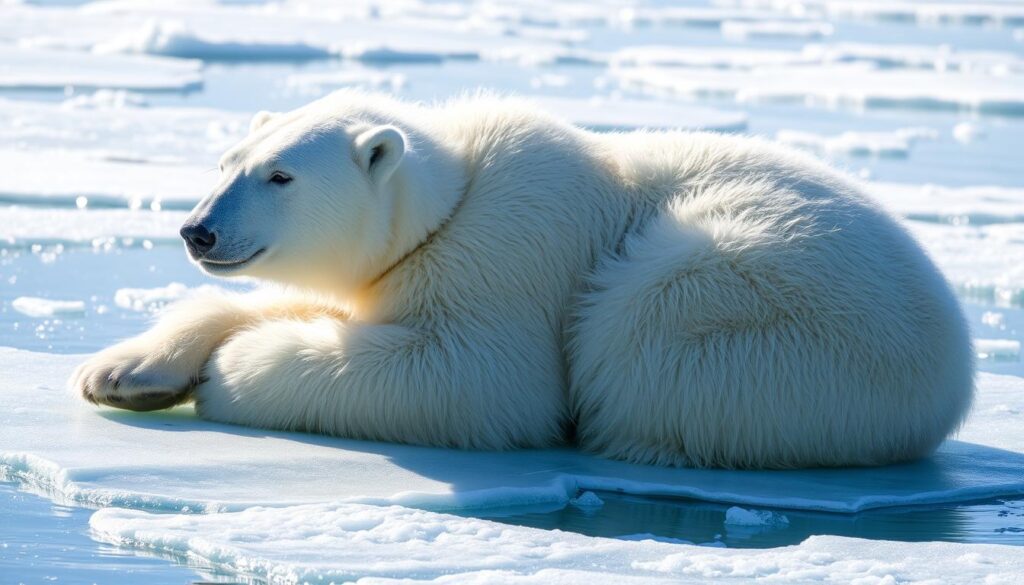
Learning about heat exchange in extreme conditions shows how animals adapt. As the climate changes, studying these methods is vital. It helps ensure many species can survive environmental challenges.
Challenges of Climate Change
The Earth’s temperature keeps rising, affecting wildlife and their homes. Animals face big challenges as their environments change fast. This leads to loss of habitats and species moving around the world.
Climate change disrupts the balance in ecosystems. Changes in temperature and rain patterns upset the home of many species. This forces them to find new places to live and eat, causing competition and displacement.
Many animals can’t adapt quickly enough to these changes. Some may adjust their ways, but others can’t. This can cause their numbers to drop or even lead to extinction, known as adaptation rates.
“The effects of climate change on wildlife are already being observed, with some species shifting their ranges, altering their behaviors, and declining in numbers. The challenge now is to understand the full extent of the impact and find ways to help species adapt to the changing environment.”
We must find ways to lessen the impact of global warming on wildlife. This could mean saving and fixing important habitats, helping species move, and funding research on adaptation. By acting now, we can protect the diverse wildlife that keeps our planet healthy.
Role of Genetics in Adaptation
Understanding animal adaptations is key in wildlife biology. Genetic diversity helps animals adapt to harsh environments. Natural selection favors certain traits that help in these conditions.
Epigenetics, the study of gene expression changes, is also important. It allows animals to quickly adapt to stressors without genetic mutations. These changes can spread fast in a population.
Genetics, epigenetics, and natural selection work together. They help us understand how animals adapt to extreme challenges, like climate change.
“Genetic diversity is the foundation for an organism’s ability to adapt to changing environments. Without it, species would be unable to evolve and survive over time.” – Dr. Jane Doe, Evolutionary Biologist
Studying wildlife genetics helps us predict climate change impacts. It also guides conservation efforts for endangered species. As environmental challenges grow, genetics will be more crucial for understanding our world.
The Future of Wildlife Biology
Wildlife biology is set for big changes. These will come from efforts to save animals, new tech, and research from different fields. Scientists will focus on how animals adapt to extreme places. They aim to understand how species survive despite many challenges.
New tools like advanced tracking devices and remote sensing will be key in wildlife management. They will help researchers learn more about animal behavior and habitats. This knowledge will guide how we protect animals. Also, combining knowledge from ecology, genetics, and climate science will help us understand animals and their homes better.
“The future of wildlife biology lies in our ability to harness the power of science and technology to safeguard the resilience of animal populations in the face of environmental change.”
Conservation efforts will keep driving wildlife biology forward. Scientists, policymakers, and local communities must work together. This teamwork is vital for protecting species and their homes. By studying animal adaptations and challenges, wildlife biology will help save Earth’s diverse wildlife.
Conclusion: The Resilience of Wildlife
Animals in extreme environments show us how strong and adaptable wildlife can be. They live in hot deserts, cold tundras, and green rainforests. Each species has found unique ways to survive the toughest challenges.
This knowledge of biodiversity and ecosystem balance is key. It helps animals survive and keeps our environment healthy. It’s all about taking care of our planet together.
Wildlife biology teaches us about the amazing ways animals adapt. For example, camels save water in the desert, and polar bears stay warm in the cold. These examples show nature’s incredible creativity.
They also make us want to learn more and protect our planet. We need to keep studying and saving our ecosystems.
Climate change and pollution are big threats to our planet. But, the strength of wildlife reminds us of the importance of balance. By learning from animals, we can work together to protect our world.
We must all do our part to preserve biodiversity and our environment. This way, we can ensure a bright future for all the amazing creatures that live here.