
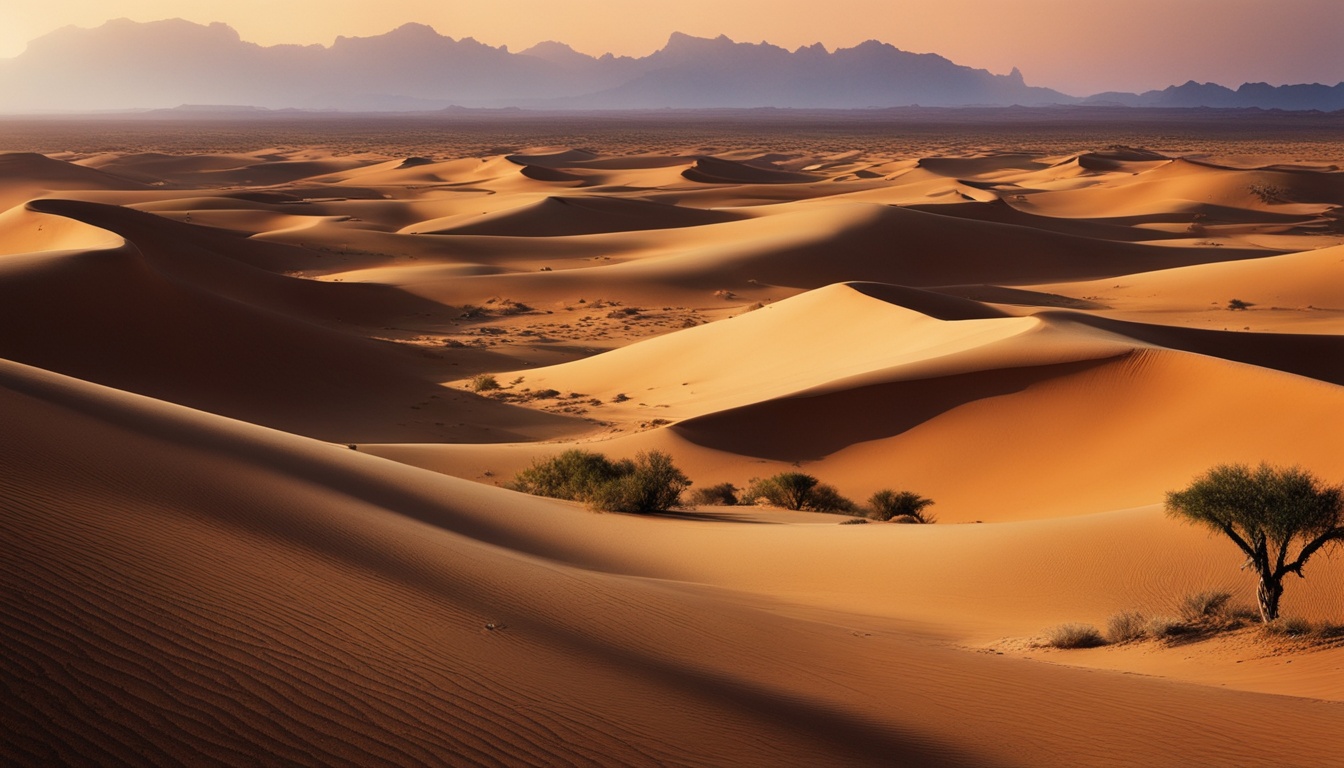
Get ready for an exciting trip through the vast and mysterious world of deserts. From the famous Sahara to the unique Atacama, these dry areas are full of natural wonders and secrets. Learn 10 interesting facts that will show you the beauty and variety of Earth’s deserts.
Deserts cover about one-third of our planet, making them a big part of our world. These dry places get less than 10 inches of rain each year. Yet, they are home to many kinds of life, from tough plants and animals to ancient cultures that have lived there for thousands of years.
Let’s dive into the world of deserts and find out some amazing facts. You’ll be amazed by the unique ways of life, natural shapes, and lasting cultures of these dry places. Get ready to see why deserts are so interesting and important to our planet.
Fun Facts: Exploring the Mysteries of Deserts
Deserts are full of fascinating facts and secrets. They show us how life thrives in extreme conditions. From how they formed to the amazing ways plants and animals live there, deserts are full of wonder.
The Salar de Uyuni in Bolivia is the biggest salt flat in the world. It looks like a mirror when it rains, making it a unique sight. Another mystery is the “fairy circles” in the Namib Desert. These are circles of bare earth surrounded by grass, which scientists still don’t fully understand.
Desert plants and animals have amazing ways to survive. For example, the kangaroo rat never drinks water. It gets all the moisture it needs from the seeds and insects it eats. This shows how life can adapt to even the toughest conditions.
The Sahara: Earth’s Largest Hot Desert
The Sahara Desert stretches across North Africa, a true wonder of nature. It’s the largest hot desert, known for its stunning landscapes. These are shaped by wind and time.
Dunes and Delights
The Sahara is famous for its huge sand dunes, some reaching 600 feet high. These dunes create a beautiful scene, always changing with the wind. Under the hot sun, the desert has oases and rocky areas that offer shade and water.
The Sahara’s climate is very hot, with temperatures over 120°F during the day. But, it’s also home to many plants and animals that live in this tough place.
Survival Strategies: Life in the Desert
The desert is tough and unforgiving but full of life. It’s home to many creatures that have found ways to survive. From plants to animals, they’ve adapted to the dry conditions.
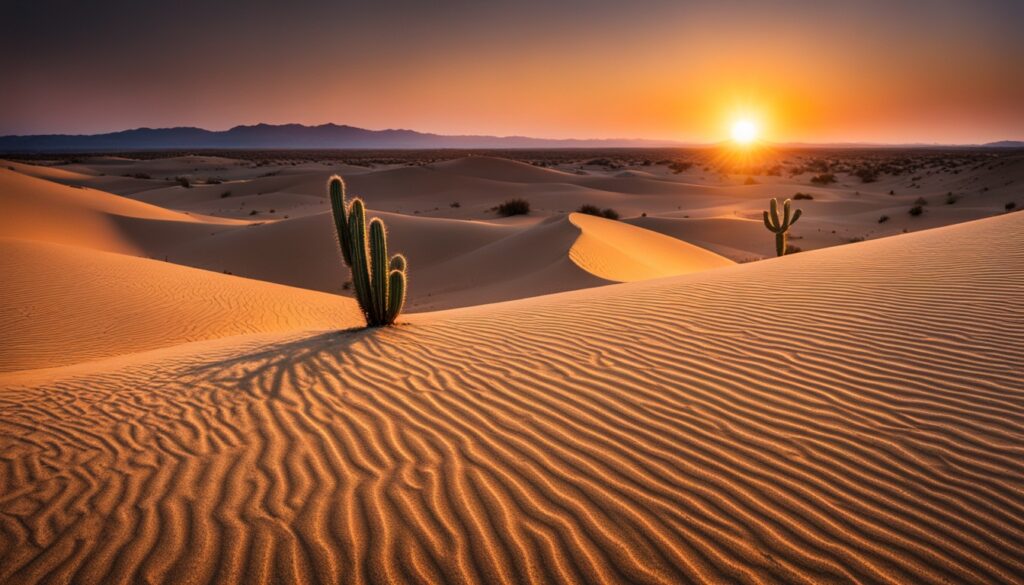
Desert plants like cacti and succulents save water and prevent it from evaporating. They have waxy coatings and can store water in their stems and leaves. Animals have also found ways to survive, such as digging burrows, controlling their body temperature, and saving water.
Microorganisms are key in the desert ecosystem. They help with nutrient cycling and keeping the balance between plants and animals. These tiny beings have adapted to the desert’s extreme heat, dryness, and strong UV rays.
The ways desert life has adapted show how resilient and adaptable life is. By studying these adaptations, we learn about the desert’s ecosystem and how life can survive in tough places.
Atacama: The Driest Place on Earth
Explore the Atacama Desert, the driest non-polar desert on Earth. It’s in the northern parts of Chile. This place shows nature’s amazing power. With its salt flats and volcanic peaks, it’s a masterpiece of geology.
Otherworldly Landscapes
The Atacama Desert looks like a scene from science fiction. Its unique geology, shaped by the harsh climate, is breathtaking. You’ll see vast plains with only a few plants surviving. Volcanoes, some still active, stand out against the desert.
The desert’s dryness has created unique geological features. Salt flats stretch for miles, reflecting the sun. The soil’s minerals make the desert colorful, with reds, oranges, purples, and blues.
Explorers, scientists, and nature lovers are drawn to this place. The Atacama Desert shows the power of nature. It reminds us of our planet’s diversity and strength.
Deserts and Climate Change
The global climate is changing, and deserts are feeling the effects. These dry areas are not just affected by the environment. They also play a big part in how the climate works.
Desertification is a big worry. It’s when dry lands get even drier because of climate change. Things like less rain, hotter temperatures, and bad land use make deserts grow. This changes the balance of life and climate in deserts.
Climate change in deserts has big effects. It makes water scarce, affects farming, and threatens unique desert animals. We need to understand how deserts and the climate are connected. This helps us find ways to lessen the harm from these changes.
We must think about how deserts fit into the world’s ecosystem as we face climate change. By looking closely at desert climate change, we can find ways to protect these areas. This helps the plants and animals that live there, and the people who do too.
Shifting Sands: Desert Formation and Evolution
Deserts are not just vast, dry places. They are dynamic landscapes shaped by forces over thousands of years. Exploring how deserts form and change is a fascinating look into Earth’s geological wonders.
Natural Forces at Work
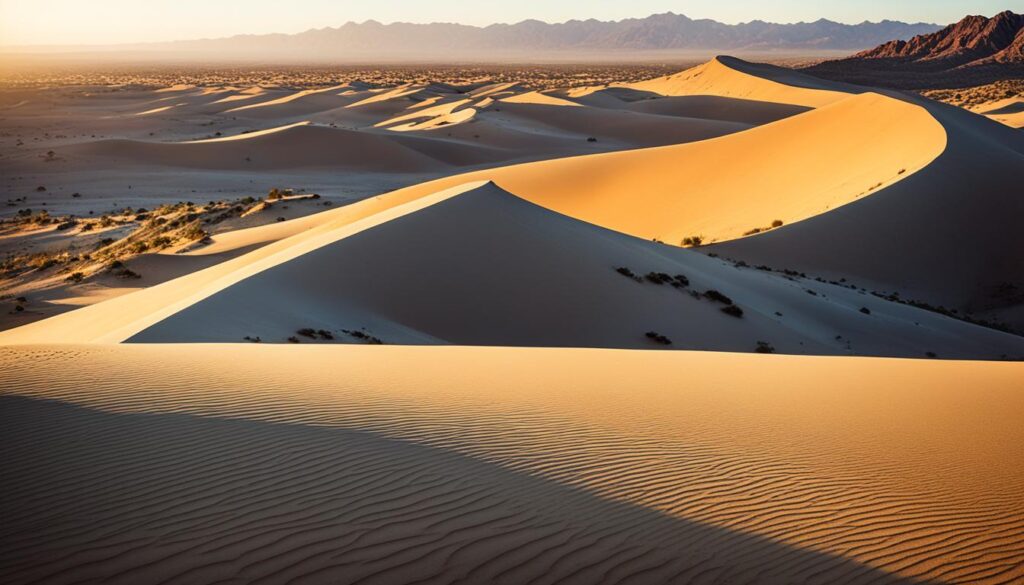
Deserts, from the Sahara’s tall dunes to the Atacama’s strange landscapes, show the complex work of desert formation and evolution. Wind, water, and tectonic forces have shaped their unique features. These forces have made the deserts we know today.
Wind and water erosion have created deep canyons and beautiful rock formations. They have also made the shifting sands that are a desert’s signature. Tectonic shifts have raised mountains and changed the climate, affecting desert life.
As the climate and Earth’s processes change, deserts keep evolving. They adapt and reveal new secrets about their creation and the forces behind them. Studying desert geology and evolution is an ongoing journey. It gives us insights into Earth’s dynamic and changing nature.
Desert Biodiversity: Surprising Inhabitants
Deserts seem tough and dry, but they’re full of life. They have a wide variety of plants and animals that have learned to live in harsh conditions. These creatures show how diverse life can be in the driest places.
Desert plants and animals have special ways to survive. Plants like cacti store water and lose it slowly. Animals, such as kangaroo rats and desert tortoises, have unique behaviors and bodies to save water.
But there’s more to deserts than what you can see. They’re also home to tiny microorganisms that are key to the ecosystem. These microbes help with nutrient cycles and plant growth, keeping the desert balanced.
Desert creatures and plants have amazing ways to adapt. Plants have deep roots to find water, and animals have special coats to stay cool. These strategies let them not just survive, but thrive in tough conditions.
Ancient Desert Civilizations
Explore the fascinating history of ancient desert civilizations. The sands have kept alive the stories of cultures that once flourished in these dry lands. From ruins in the Sahara to rock art in the Atacama, deserts have seen the rise and fall of great civilizations. These civilizations have left their mark on human history.
Remnants of the Past
Discover the secrets of ancient desert cultures through archaeological finds and artifacts. See the abandoned cities and fortresses that were once alive with people. Understand the rock carvings and paintings that show the creativity of these desert people.
Learn how these ancient cultures survived in tough environments. They developed unique ways to live and thrive despite the challenges.
The world’s deserts tell the stories of our ancestors. The ruins of Petra in Jordan and the Nazca Lines in Peru are just a few examples. These sites show the rich heritage of our planet. They invite us to explore and learn from the past.
Fun Facts: Fascinating Desert Phenomena
Deserts are not just empty lands; they are full of fascinating natural wonders. They have mirages that trick the eyes and sand dunes that seem to float. These deserts are full of mysteries waiting to be discovered.
In Death Valley, California, there’s a magical sight called “sailing stones.” These rocks move on their own, leaving trails in the dry earth. Scientists have been trying to figure out this mystery for years.
Another mystery is the “fairy circles” in Namibia. These are circular bare spots in the grasslands. Researchers have been puzzled by them for a long time.
Utah’s Bryce Canyon National Park has amazing geological formations called hoodoos. These tall structures were shaped by wind and water. They look like they come from another world.
There’s also “desert varnish,” a dark coating on rocks. It tells us about the dry environment’s long history. These are just a few of the many desert wonders out there.